


Whether you’re considering buying your next property in Whetstone or find yourself on the other side of the coin, understanding recent changes in the property market can be the difference between a well-timed decision and a costly mistake.
Assume Move’s guide to Whetstone house prices draws on two sources. The first is official data, Land Registry sold prices*, Rightmove, and Zoopla; the second is Assure Move’s own sales activity across Whetstone and the surrounding N20 area over the last 6 to 12 months, which gives us a ground-level view that no aggregator or portal can replicate. We were the ones handling sales on these streets, and that context matters
Where you see “Tony’s Take”, that’s Tony Mixides, Assure Move’s co-director, adding his own interpretation of what the numbers mean. It’s his direct read of the market based on what he sees every week, not what the data alone can tell you.
*accessed via londonhouseprices.co.uk
Whetstone House Prices: The big winners and losers
According to Land Registry data, the average price for a home in Whetstone N20 sits at about £685,454 for the 12 months leading to April 2026; representing a -1.89% change compared to the previous period. On Rightmove and Zoopla, the same datapoint comes to £874,880 and £789,538, respectively—an indication of the differences in the property type mixes and geographic boundaries used in the calculation.
While this figure is a starting point, the reality on the street is that not all property types are moving in the same direction. Flats in Whetstone N20 rose 5.88% in the year to April 2026, reaching an average of £522,178. Semi-detached houses fell 16.05% over the same period, an unexpected finding considering that demand for semi-detached homes had been consistently strong in N20 for years.
The gap in flat vs semi-detached home performance is significant, representing a 22% difference between the strongest and weakest-performing property types within a single postcode.
Tony’s Take on the Big Winners and Losers in the Whetstone Property Market
I wouldn’t say the headline figures completely match what we’re seeing on the ground. From our perspective, the leasehold market in Whetstone is relatively flat rather than genuinely outperforming houses.
The 5.88% increase in the average flat sale price is interesting, but averages can be heavily influenced by the type and quality of stock that happens to complete during that period. I certainly wouldn’t say we’re seeing flats generally achieving 5–6% more than comparable properties were a year ago.
What we are seeing is a very price-sensitive market. Good flats still sell, particularly those close to Totteridge & Whetstone station, with sensible service charges, good lease lengths and realistic asking prices. However, buyers have choice and they’re increasingly conscious of the total cost of owning a leasehold property.
I would apply similar caution to the 16% fall in semi-detached values. I don’t believe the average Whetstone semi has genuinely lost 16% of its value in a year. There are fewer transactions at that price level and a huge difference between individual houses, so the mix of properties sold can have a significant impact on the average.
Overall, I’d describe Whetstone as a relatively flat and price-sensitive market rather than one where flats are surging and houses are collapsing.
Tony’s Take: Our Experience in Whetstone Over the Last 6-12 Months
What sold quickly, and why
The strongest competition is for properties where buyers immediately recognise value.
Good family houses at an achievable price point are particularly strong because there is always demand from people wanting to move into Whetstone for the area, transport and schools.
We’re also seeing good flats sell when everything lines up: sensible service charge, good lease, decent condition and the right asking price. That said, I wouldn’t describe the leasehold market generally as highly competitive.
The properties selling quickest are normally those where the seller has listened to the market from day one. If we launch something at a price that generates a strong first week of viewings, we’re much more likely to create competition and achieve a good result.
What took longer, and why
Overpricing is probably the biggest reason we’re seeing properties sit on the market.
The mistake some sellers make is thinking, “We’ll start £50,000 higher and buyers can make an offer.” In reality, buyers are much more informed now. They can see what else is available, what has been reduced and often what comparable properties previously sold for.
If the price is wrong, they frequently don’t make a lower offer, they simply don’t view it.
Condition is another factor, particularly with houses. Buyers will take on work, but they calculate that work into their offer. A house requiring substantial modernisation can’t necessarily be priced close to a finished example on the same road.
Leasehold properties have their own issues. High service charges in particular can make otherwise attractive flats difficult to sell.
We therefore are seeing properties require reductions, but I wouldn’t say there is a universal 4–8% rule. It depends entirely on how ambitious the original asking price was.
The Key Market Data: Whetstone House Prices in 2026
Here is the full official data picture, drawn from various listed sources, alongside current market listing data.
Official and market-sold price data, Whetstone N20 (to April 2026, provisional)
| Metric | Figure | Annual Change | Source |
|---|---|---|---|
| Average house price, all types | £685,454 | +1.3% | Londonhouseprices/Whetstone |
| Flats average price | £522,178 | +0.9% (in line with Apr 2025) | Londonhouseprices/Whetstone |
| Semi-detached house price change | N/A | +2.3% (from £738,000) | Londonhouseprices/Whetstone |
| Zoopla average (N20 Whetstone Totteridge) | £789,538 | +1.2% (from £599,000) | Zoopla |
| Rightmove average (N20) | £874,880 | +2.1% (from £625,000) | Rightmove |
| N20 8 sector (Totteridge end) | N/A | +4.1% year-on-year | Housemetric |
| N20 0 sector (Whetstone) | N/A | Approximately 0% year-on-year | Housemetric |
| N20 9 sector (Whetstone) | N/A | -2.1% | Housemetric |
| 5-year average (2025 vs 5 years prior) | £773,973 (2025 avg) | +3.8% (from £260,000) | Housemetric |
All figures are subject to revision as Land Registry data is updated. Figures from different sources reflect different geographic boundaries and methodologies.
Current market listing data, approximate asking prices
| Property Type | Approximate Asking Price Range | Source |
|---|---|---|
| 1-bedroom flat | £290,000–£425,000 | Zoopla / Bricks & Logic |
| 2-bedroom flat | £385,000–£650,000 | Zoopla / Bricks & Logic |
| 3-bedroom terraced house | £650,000–£900,000 | Zoopla / Rightmove |
| 4-bedroom semi-detached | £900,000–£1,275,000 | Zoopla / Bricks & Logic |
| 5+ bedroom detached | £1,450,000–£1,950,000+ | Zoopla / Bricks & Logic |
One thing the listing data makes clear: even as average asking prices in Whetstone have moved lower, asking prices are still regularly being reduced before properties go under offer. That tells you something important about where sellers are starting their pricing versus where buyers are prepared to transact—and it highlights why the launch price matters more in this market than it did two or three years ago.
The Standout Story: Why Flats Are Outperforming Houses in Whetstone
The 5.88% rise in Whetstone flat prices against a -1.89% overall market is not a statistical quirk; it reflects a genuine and identifiable shift in buyer behaviour that is worth understanding in detail.
Why flats are outperforming
Whetstone’s flat market sits in the £400,000–£550,000 price bracket and is accessible to mortgage buyers who have benefited from the Bank of England’s rate reductions since late 2025. At the same time, N20 offers something genuinely scarce at that price point: a Northern Line station in Totteridge & Whetstone with direct access to Bank and London Bridge in under 30 minutes.
For professional buyers working central London jobs who want space, greenery, and a reliable commute without paying inner-London prices, a Whetstone flat represents strong value. When motivated buyers chase limited stock, prices move, and that is what the data is reflecting.
Why semi-detached houses have cooled down
The maths for family house buyers in Whetstone in 2026 is straightforwardly difficult. With 4-bedroom semi-detached asking prices in N20 currently running from £900,000 to £1,275,000, a buyer at the lower end of that range still needs a mortgage of roughly £720,000 on a 20% deposit. At standard income multiples, this means a joint income well into six figures. That narrows the buyer pool significantly. It also means that Whetstone semi-detached houses are now directly competing for the same buyers as equivalent properties in Finchley, Barnet, and New Barnet — areas offering comparable schools, transport, and green space at broadly similar price points. In that competition, Whetstone no longer automatically wins on price.
The detached market operates differently.
This is genuinely premium stock where buyer decisions are driven less by mortgage affordability and more by property rarity, plot size, and specific location. Recent Land Registry records show a five-bedroom property on Greenway selling for £1,950,000 in April 2026 and a four-bedroom house on Buckingham Avenue at £1,275,000, which gives some sense of the range, alongside current asking prices of £1,450,000 and above for 5+ bedroom detached homes.
Tony’s Take on Flats vs Semi-detached vs Detached Housing Prices
It’s worth saying upfront that averages like these are only ever a snapshot of whatever happened to complete in that period, and with so many properties changing hands across so many different agencies in an area this size, basing a decision purely on the headline data isn’t always the right move. Outliers exist, and they can skew a small sample more than people expect.
Based exclusively on our own experience, I would challenge the idea that flats are currently “winning” in Whetstone.
From what we’re seeing, the leasehold market is fairly flat. There is demand, but buyers are selective. Service charges, lease length, major works and the general cost of leasehold ownership are increasingly important.
The advantage flats have is simply the size of the potential buyer pool. There are naturally far more people capable of buying at £400,000–£500,000 than at £1m–£1.5m.
Semi-detached houses haven’t suddenly become undesirable either. Good family houses on good roads still attract buyers. The difficulty is affordability. Once somebody is spending £1m or more, they have a lot more choice and will compare Whetstone with Totteridge, Finchley, Barnet and New Barnet.
Detached houses are almost a market of their own. There aren’t enough directly comparable transactions to look at an annual percentage movement and assume it represents every detached house in N20. Plot, road, condition and specification can make hundreds of thousands of pounds of difference.
So I’d describe the difference as depth of buyer pool rather than flats outperforming houses.
Micro-Area Intelligence: Where in Whetstone Prices Are Moving
N20 covers more ground than many buyers and sellers appreciate, and the postcode-level data tells very different stories depending on which part of it you find yourself in.
The Totteridge end of N20, covering Totteridge Lane, Longland Drive, Holden Road, and the quieter residential streets to the west of the High Road, was the only part of the postcode to record positive annual price growth in the last year, at +3.4%. This part of Whetstone attracts a distinct buyer: typically purchasing at higher price points, often with significant equity or cash, and less exposed to mortgage rate movements than buyers at the entry-level end of the market. A property on Lynton Mead sold for £1,280,000 in June 2026 according to Land Registry records.
These two postcode sectors together cover the core of Whetstone, the High Road, Oakleigh Park, and the streets running off them, and both recorded significant falls in the last year: -7.5% for N20 0 and -8.2% for N20 9.
That reflects a higher concentration of apartment stock, greater sensitivity to service charges and leasehold conditions among buyers, and more price competition from neighbouring postcodes. The flip side is value: buyers willing to look carefully in this part of N20 will find more room to negotiate than at the Totteridge end of the postcode. Recent Land Registry data shows sales ranging from £290,000 for a two-bedroom flat on Cameron Close to £830,000 for a three-bedroom house on Ainsworth Close; a wide spread that illustrates just how varied this part of N20 is.
The streets running off the High Road towards Torrington Park represent some of the most established residential addresses in Whetstone and include Victorian and Edwardian terraces and semis that retain strong family demand because of the school catchments, the walkability to the tube, and the proximity to open spaces including Friary Park. This is the part of N20 that has historically offered the clearest value case for family buyers who want a Whetstone address without the Totteridge premium.
The southern end of N20, running towards Oakleigh Park station and the New Barnet boundary, offers an accessible entry point into the postcode — Zoopla currently lists two-bedroom terraced houses here from around £485,000 and larger family homes up to £1,450,000. Buyers in this area are often weighing N20 against adjacent EN5 and N12 options, which keeps pricing relatively competitive.
Tony's Take on Where in Whetstone Prices are Moving
There is a significant difference even within N20.
Totteridge and the best roads at the N20 8 end tend to be more resilient because buyers are often specifically looking for that location. Scarcity also helps. If somebody wants a particular road or type of house, there may only be one suitable property available.
Around the High Road and station, convenience becomes a bigger driver. That’s particularly important for flats and smaller houses because buyers are often commuting and proximity to the Northern Line has tangible value.
The established residential roads around Torrington Park and Bellevue remain attractive to families, while towards Oakleigh Park and New Barnet buyers tend to become increasingly value-conscious because they can compare properties across the N20/EN5 boundary.
That’s another reason I’d be cautious about postcode-wide averages. Moving half a mile within N20 can change the type of buyer, housing stock and achievable £/sq ft quite considerably.
What Is Driving the Whetstone Market in 2026

The postcode split: N20 8 versus N20 0 and N20 9
The 3.4% growth in N20 8 against the -7.5% and -8.2% falls in N20 0 and N20 9 is the clearest illustration of how granular the Whetstone market has become. Buyers are increasingly discriminating between the quieter residential feel of the Totteridge end of the postcode and the more urban character of the High Road area, and paying a premium for the distinction. For sellers, this means that a property’s precise location within N20 now has more bearing on its achievable price than at any point in recent memory.

The Northern Line premium is pulling flat buyers into N20
Totteridge & Whetstone is the northernmost stop on the Northern Line. That geographic fact has always been a selling point, but in 2026, as more employers have reinstituted mandatory office days and commute time has become a live factor in relocation decisions again, the tube premium is doing active work in the Whetstone flat market. Buyers who might have looked further out in 2021 or 2022, when hybrid working was at its most permissive, are now prioritising journey time and N20 benefits directly from that shift.

Mortgage affordability is shaping where demand concentrates
The Bank of England base rate was cut to 3.75% in December 2025 and held through four consecutive Monetary Policy Committee meetings to June 2026. That has helped buyers at the £400,000–£600,000 level, which covers most of Whetstone’s flat market, but has had limited impact on the affordability of family houses at £800,000 to £1.2 million, where the loan sizes required remain substantial even at current rates. The affordability ceiling for houses in Whetstone is a structural constraint that is not going to resolve quickly.

Competition from Finchley, Barnet, and New Barnet
In the family house segment, Whetstone is no longer the obvious choice it once was for buyers coming from a budget of £700,000 to £1 million. North Finchley, Finchley Central, and New Barnet offer comparable schools, green space, and transport access at prices that are now broadly similar to or below Whetstone’s house price range. That competition is one of the factors suppressing demand for semi-detached houses in N20 — buyers have more options at similar price points than they did three or four years ago.

Tony’s Take on What’s Driving the Whetstone Property Market
For me, the biggest factor is affordability.
There is still demand to live in Whetstone. The issue isn’t convincing people that it’s a good place to live; it’s what they can afford to pay for it.
The difference in monthly cost between borrowing against a £500,000 purchase and a £1m purchase is enormous. That’s why the market becomes much more sensitive as you move into larger family houses.
I think affordability will remain the main driver over the next 12 months. If borrowing becomes cheaper, the part of the market I would expect to benefit most is the middle and upper family-house market because that’s where mortgage costs are currently having the greatest impact.
What This Means If You Are Selling in Whetstone
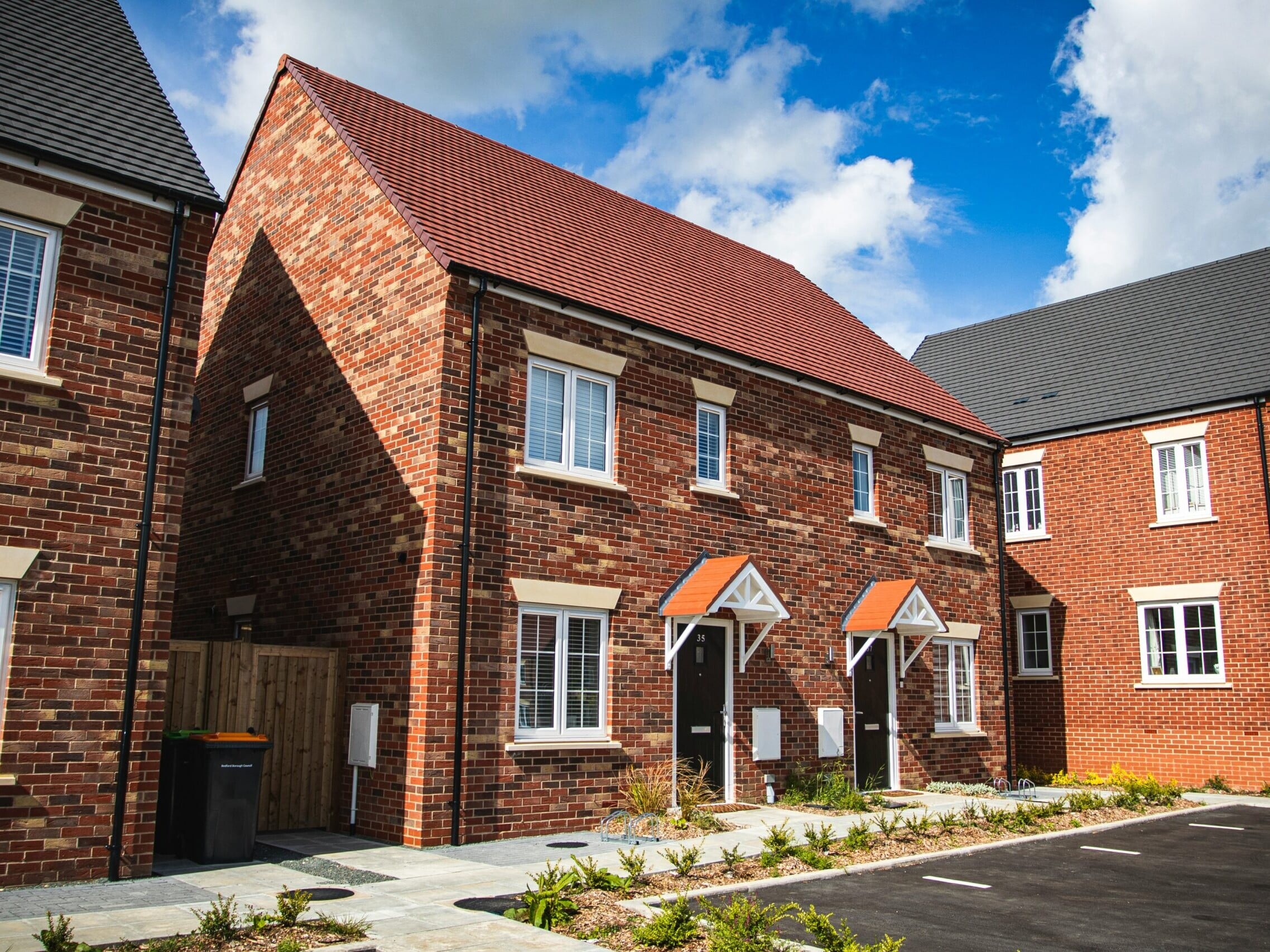
Flat owners currently hold the stronger hand. At price points where mortgage buyers are most active, demand in Whetstone is real and moving. A correctly priced flat with good presentation is finding buyers faster than most other property types in N20 right now. For house owners, the market requires a more candid conversation about current value.
The -16.05% annual movement in semi-detached prices is not a rounding error, and pricing that ignores it tends to produce extended marketing periods rather than higher offers. The opening fortnight of any sale campaign remains the most valuable window and overpriced properties typically sit through it without generating competition, while correctly priced ones use it.
What This Means If You Are Buying in Whetstone
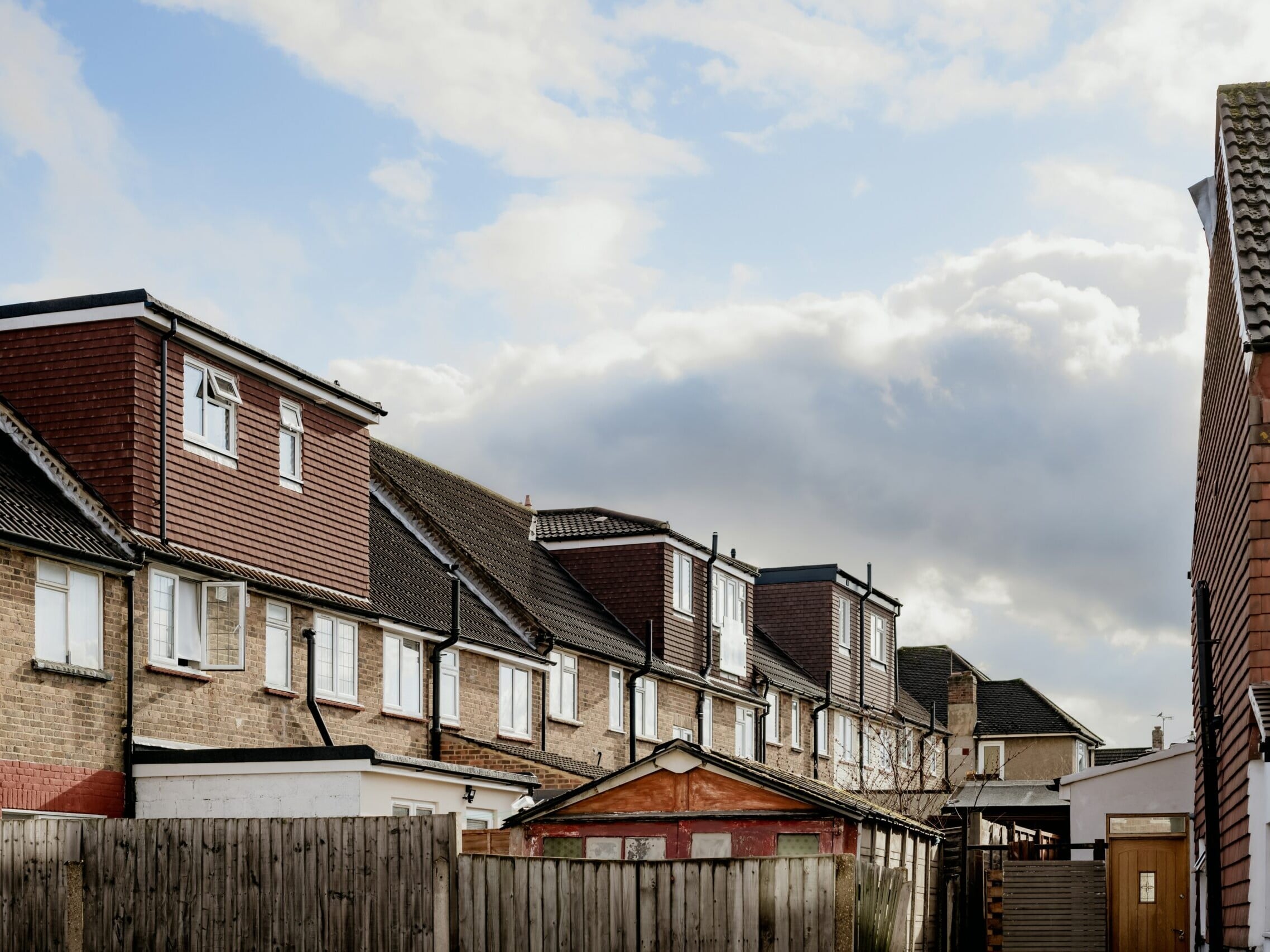
Whetstone’s overall price softening has created genuine opportunities, particularly for buyers targeting houses. The N20 0 and N20 9 sectors have fallen -7.5% and -8.2% respectively, which gives buyers meaningful negotiating room that has not been available in this postcode for several years.
For flat buyers, the picture is different. That market is more competitive, better-priced stock is moving faster, and having a mortgage agreement in principle in hand before viewing is not a formality but a practical advantage. Buyers who have been waiting for the right moment in Whetstone will find the current market more accommodating than anything seen since 2022.


Assure Move: Whetstone and North London's Independent Property Experts
Tony Mixides and Luke Paschali opened Assure Move’s Whetstone branch at 1345 High Road, N20 9HR, with a straightforward aim: to give buyers and sellers in this part of North London advice that is grounded in what the market is actually doing; not what an agent wants it to be doing. We are independent, we are active in this postcode every week, and we are often aware of properties coming to market before they appear on the portals.
We also operate a Hackney branch at 457 Queensbridge Road, E8 3AS, covering East London.
Whetstone Property Market FAQs
What is the average house price in Whetstone in 2026?
Land Registry data puts the average at approximately £685,454 for the twelve months to April 2026. Rightmove’s N20 average is higher at £874,880, and Zoopla records £789,538 for Whetstone Totteridge. These differences reflect the varying geographic coverage each dataset uses. The most useful figure for any individual property will depend on its type, condition, and precise location within N20.
Are house prices in Whetstone going up or down in 2026?
The overall average is down -1.89% annually to April 2026, but that headline conceals a significant split. Flats rose 5.88% while semi-detached houses fell -16.05% over the same period. The direction of travel for any specific property depends heavily on what type it is and which part of the postcode it sits in.
Why are Whetstone flat prices rising while house prices are falling?
Flats in N20 sit in the £400,000–£550,000 range. It’s the price bracket most directly benefiting from improved mortgage affordability following Bank of England rate cuts. The Northern Line connection at Totteridge & Whetstone makes the area highly attractive to professional buyers, and the supply of well-presented flats in good locations is constrained. Houses, particularly semi-detached, face stiffer competition from comparable properties in Finchley, Barnet, and New Barnet at similar price points, which is compressing demand.
Which part of Whetstone has the highest house prices in 2026?
The N20 8 postcode sector, covering Totteridge Lane, Longland Drive, Holden Road, and surrounding streets, was the only part of the N20 postcode to record positive annual price growth in the last year (+3.4%). This is Whetstone’s most premium residential area, characterised by larger detached and semi-detached homes, generous plots, and a quieter residential character.
What is the average price for a flat in Whetstone in 2026?
Land Registry data puts the flat average at £522,178, up 5.88% year-on-year. Current asking prices range from approximately £290,000 for a one-bedroom flat to £650,000 for a larger two-bedroom, depending on specification and exact location within N20.
What is the average price for a house in Whetstone in 2026?
Prices vary considerably by type. Current asking prices give a useful guide: 3-bedroom terraced houses typically range from £650,000–£900,000, 4-bedroom semi-detached from £900,000–£1,275,000, and 5+ bedroom detached homes from £1,450,000 upwards. Recent Land Registry transactions confirm this range in practice: a three-bedroom house on Mcready Road sold for £810,000, a four-bedroom on Buckingham Avenue for £1,275,000, and a five-bedroom on Greenway for £1,950,000.
Is now a good time to sell a flat in Whetstone?
2026 is a relatively good time to sell a well-presented flat in N20. Buyer demand in the sub-£550,000 price bracket is active and improving, and flat prices are showing positive annual growth. Realistic pricing from the start of the campaign remains important, even in a rising segment, properties launched above the market tend to sit through the critical first two weeks without generating offers.
Is now a good time to sell a house in Whetstone?
The market for houses in N20 requires careful pricing in 2026. Semi-detached prices have fallen significantly, and launching at previous peak values is likely to result in a prolonged marketing period. A candid, evidence-based valuation from a local agent who is actively selling in your street is the most reliable starting point. Assure Move offer a free, no-obligation market appraisal. Contact us here.
Is now a good time to buy in Whetstone?
The overall drop in Whetstone house prices, particularly in the N20 0 and N20 9 sectors, gives buyers more negotiating room than this postcode has offered for several years. For flat buyers, the market is moving faster, so having finance in place before viewing is advisable. For both buyer types, the current market is more accessible than 2021 or 2022.
How do I find out what my Whetstone property is worth?
An online valuation gives you a starting point but can be materially out in either direction for individual properties, particularly in a market as varied as N20, where prices differ significantly between postcode sectors and property types. Assure Move offers a free, in-person market appraisal for Whetstone homeowners based on current market activity and comparable recent sales on your specific streets. Contact us here to arrange one.
Assure Move are independent estate and letting agents based in Whetstone (1345 High Road, N20 9HR) and Hackney (457 Queensbridge Road, E8 3AS). Telephone: 0203 971 2294. This article is a general market overview and does not constitute financial or legal advice. Data sourced from Land Registry, londonhouseprices.co.uk, Rightmove, Zoopla, housemetric.co.uk, bricksandlogic.co.uk, and Assure Move’s own internal sales data, correct at time of writing, September 2026.
Hero photo “Haven, Whetstone, N20” by Ewan Munro is licensed under CC BY-SA 2.0. Source: Flickr.


